Solutions / Deburring
A burr is never twice in the same place.
Robotic deburring of castings and machined parts, with diamond wheels, compliant tools and real-time feedback from the robot. On cast iron, aluminium and light alloys.
Solutions / Deburring
Robotic deburring of castings and machined parts, with diamond wheels, compliant tools and real-time feedback from the robot. On cast iron, aluminium and light alloys.
The starting point
Manual deburring is one of the most tiring and least repeatable jobs in the workshop: it depends on the hand, the tool and how tired the person doing it is. It is also dusty and noisy.
Automating it faces one specific obstacle: the raw casting varies from part to part. A fixed robot path breaks the tool or leaves the burr. You need a cell that adapts to the part in front of it.
Step by step
The Foresight vision system locates the raw casting and guides the grip: the part doesn't have to arrive in position.
Diamond wheels and rotary burrs mounted on tools that absorb the casting's variability without breaking.
The robot reads the contact force and adapts the path: it avoids collisions and leaves no burr on out-of-tolerance parts.
Multi-position set-up to work several faces of the same part without manual re-clamping.
The cells
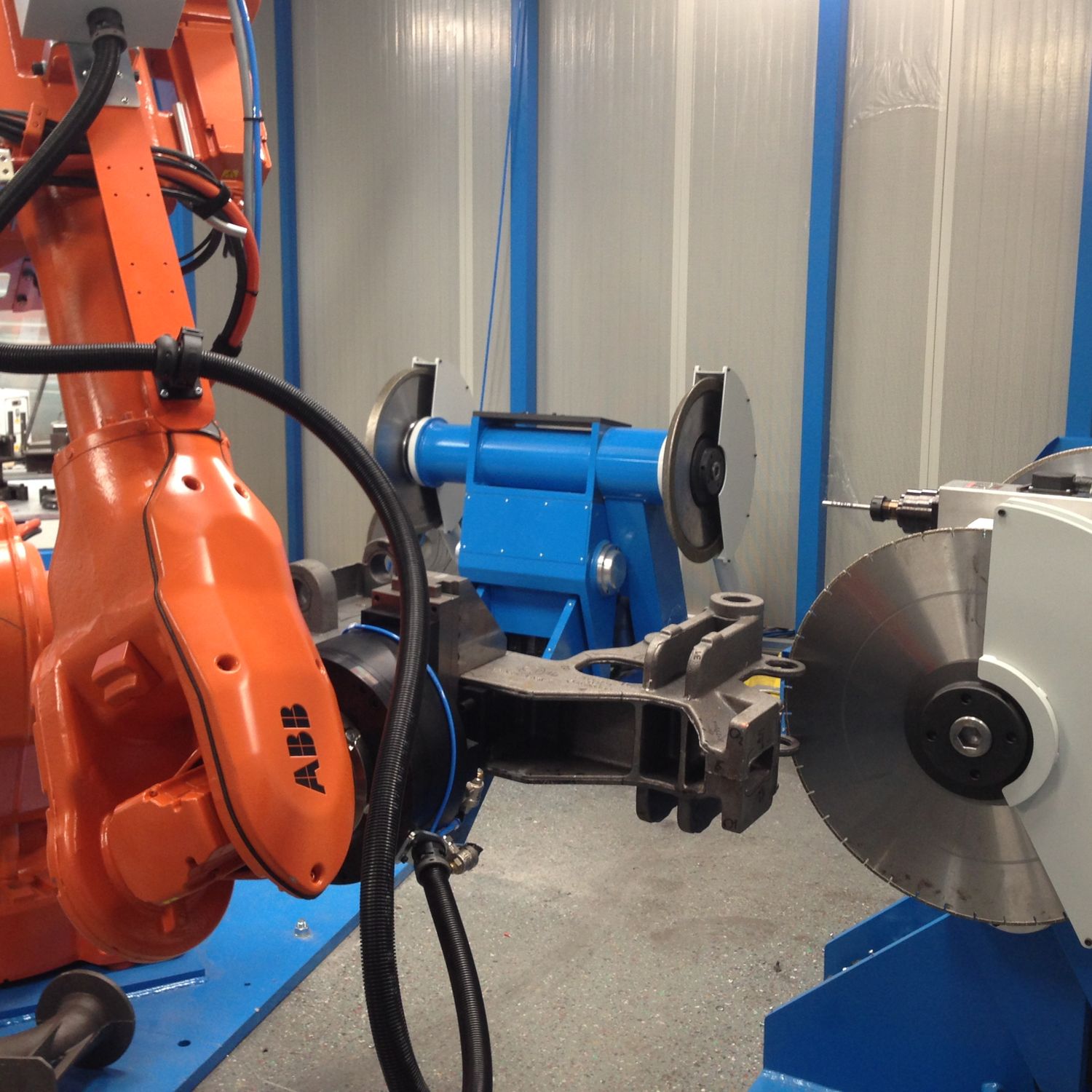
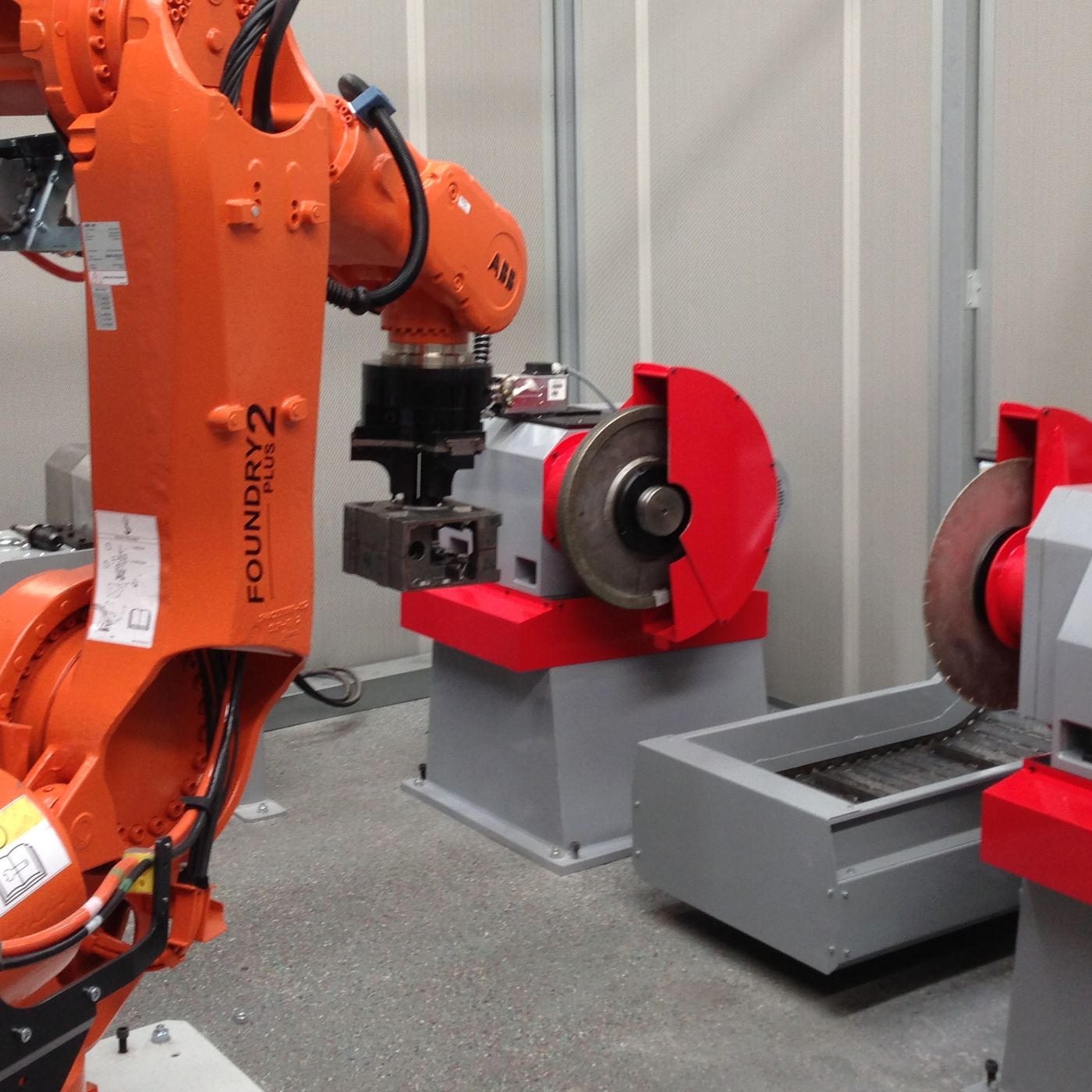
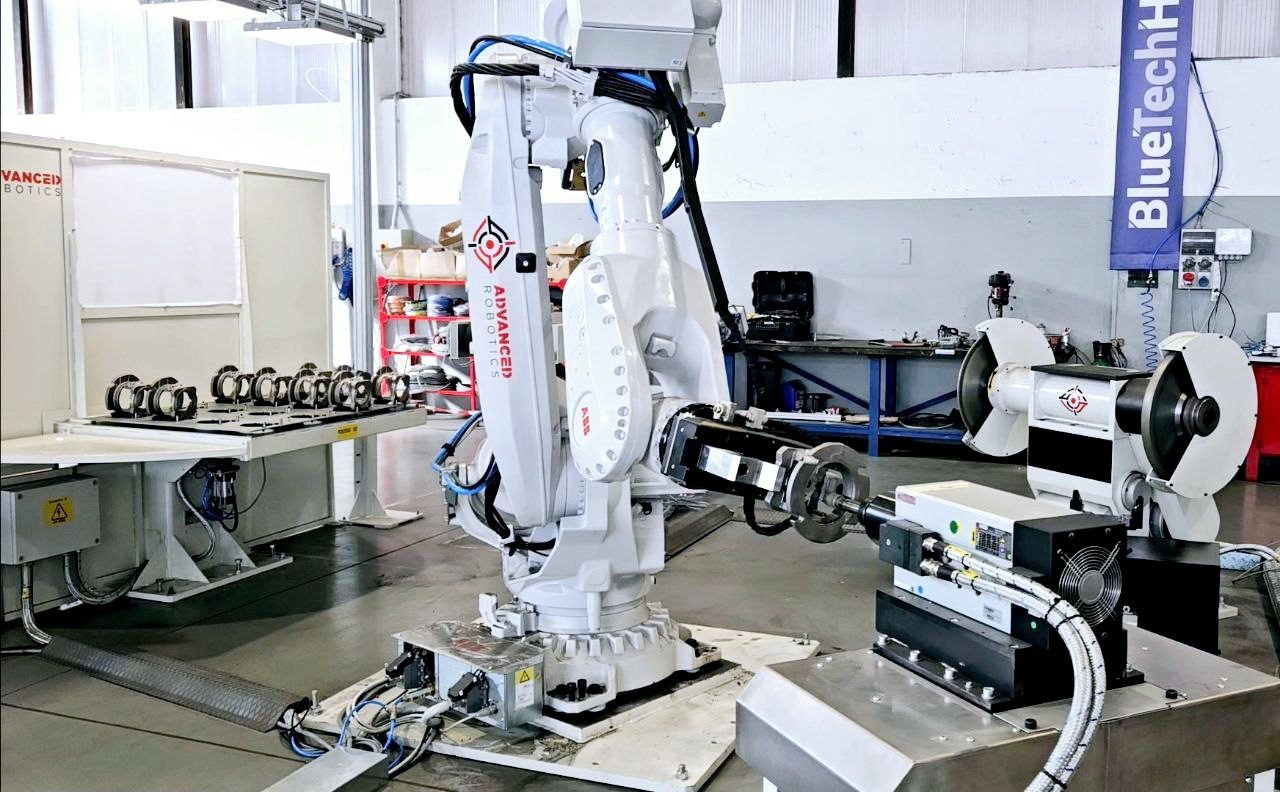
The robot presents the casting to the diamond wheel: the path adapts to the part, not the other way round.
Configuration
Other solutions