Solutions / Vision-guided cells
When the part's position is predictable, classic vision is quicker to commission and cheaper. When it isn't, you need artificial intelligence. We do both, and we tell you which one you need.
The criterion
It is the first question anyone automating a pick asks. The answer isn't a product: it is a criterion.
When rules are enough
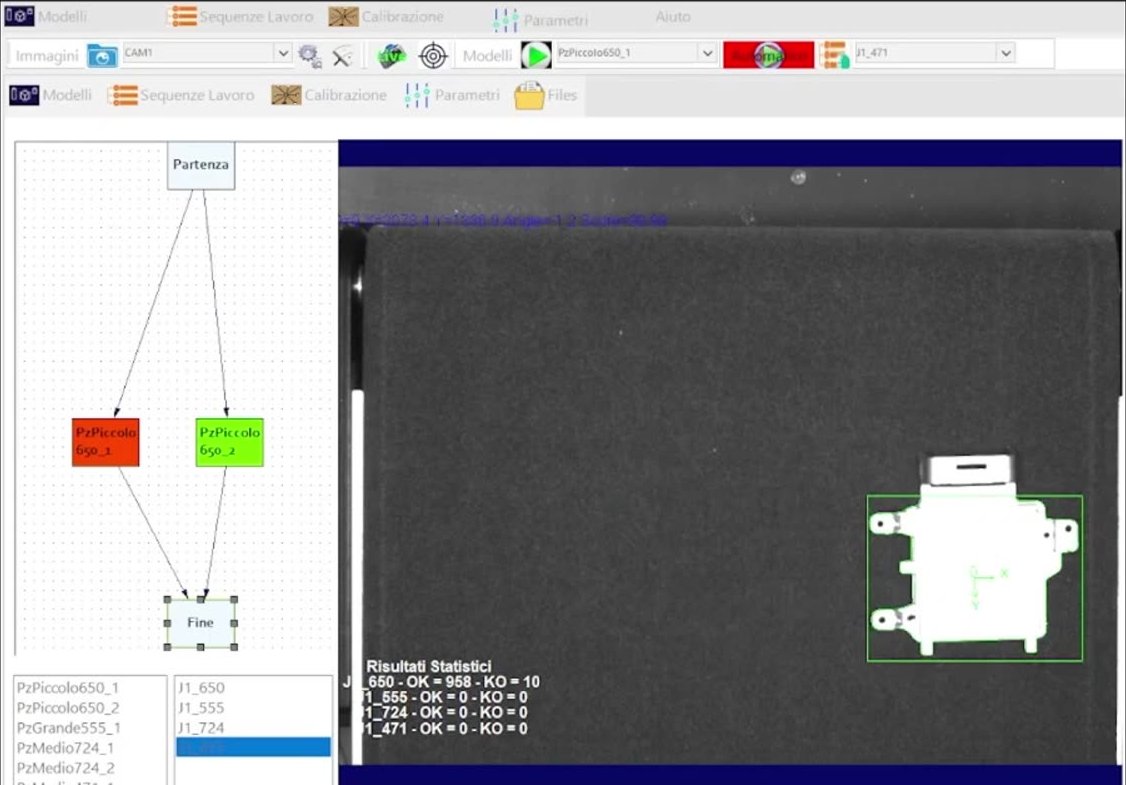
Foresight is our robot guidance vision system, based on traditional vision: automatic calibration, quick set-up, integration with robots of every generation.
When to use itIn most cases. It costs less, is validated sooner and needs no training phase.
When no rule describes the part
There are processes where rule-based vision stops and automation gets filed as "not feasible". That is where a trained model comes in.
When to use itWhen the process has already been declared impossible. We start with a feasibility study on your parts.
Together
Classic vision guides the pick and AI handles the edge case, or inspects the quality of the part the robot is already handling. See quality control.
Guidance
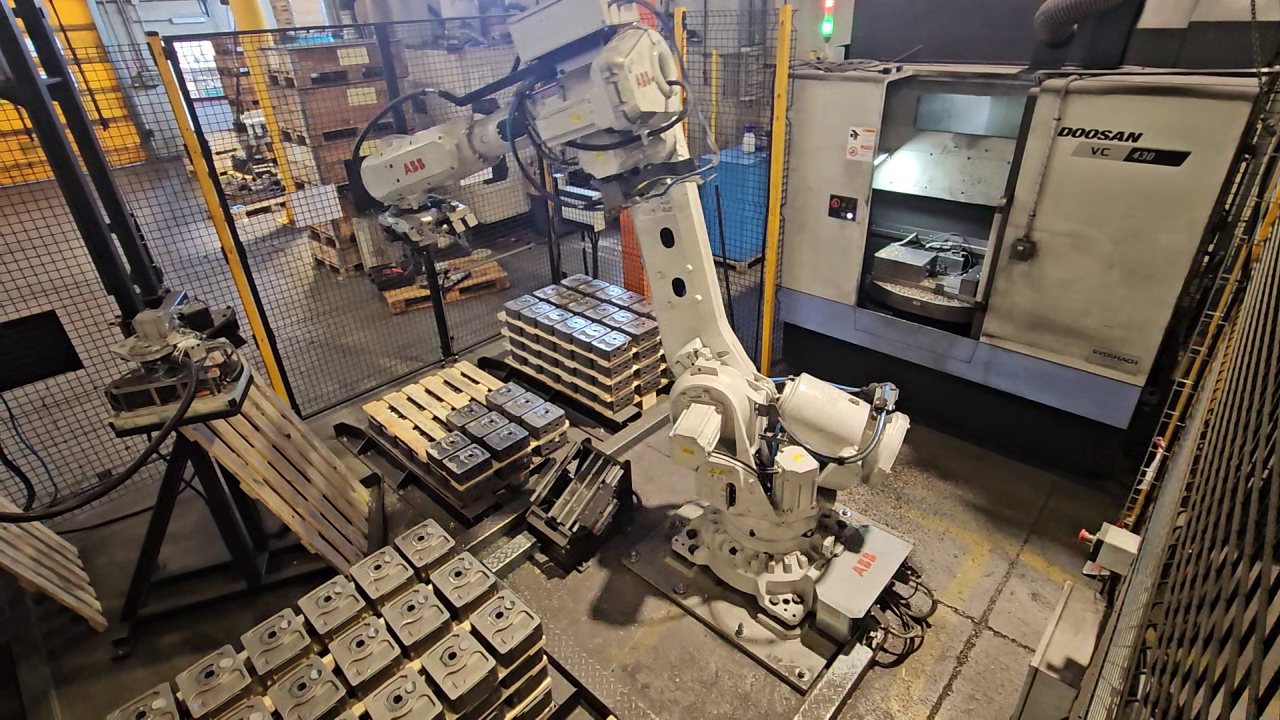
The robot picks the part where it really is, with no dedicated positioning fixtures.
The system recognises which way the part faces and presents it correctly to the next station.
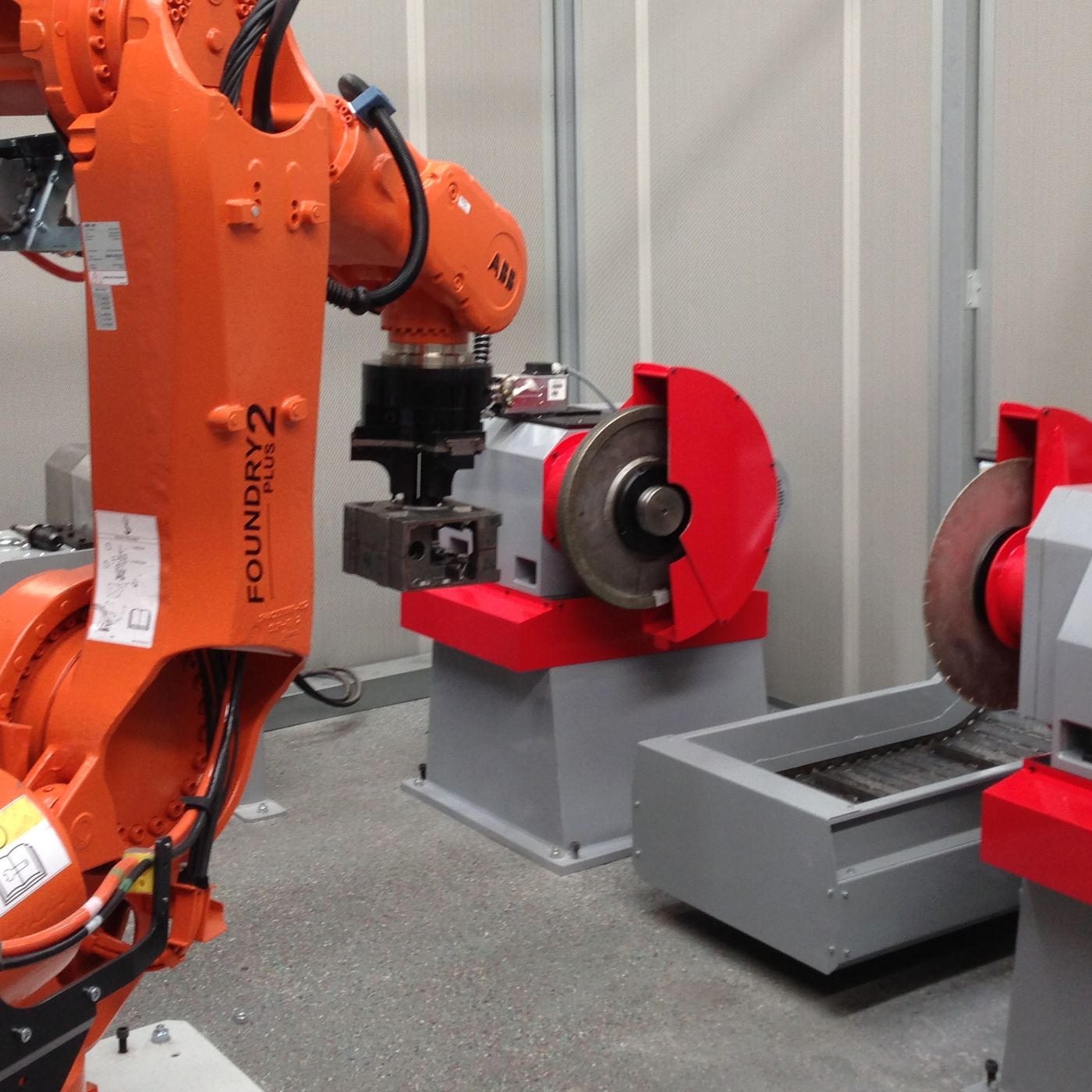
The trajectory adapts to the actual part: essential for deburring and contact operations.
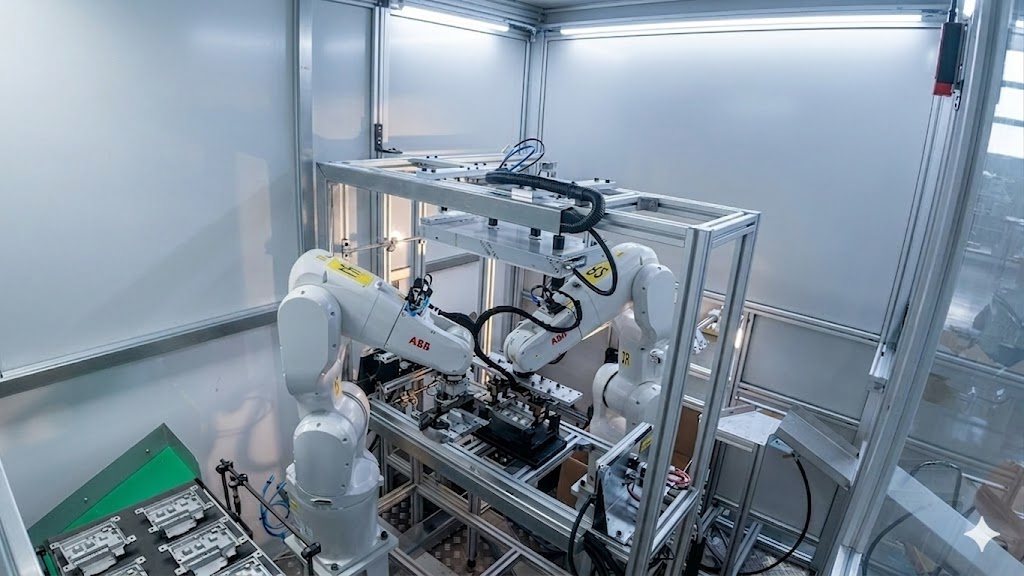
The same optics can verify presence, orientation and conformity before the next step.
Foresight
Foresight was born as a robot guidance product and also works inside our deburring cells, picking up raw castings.

Other solutions