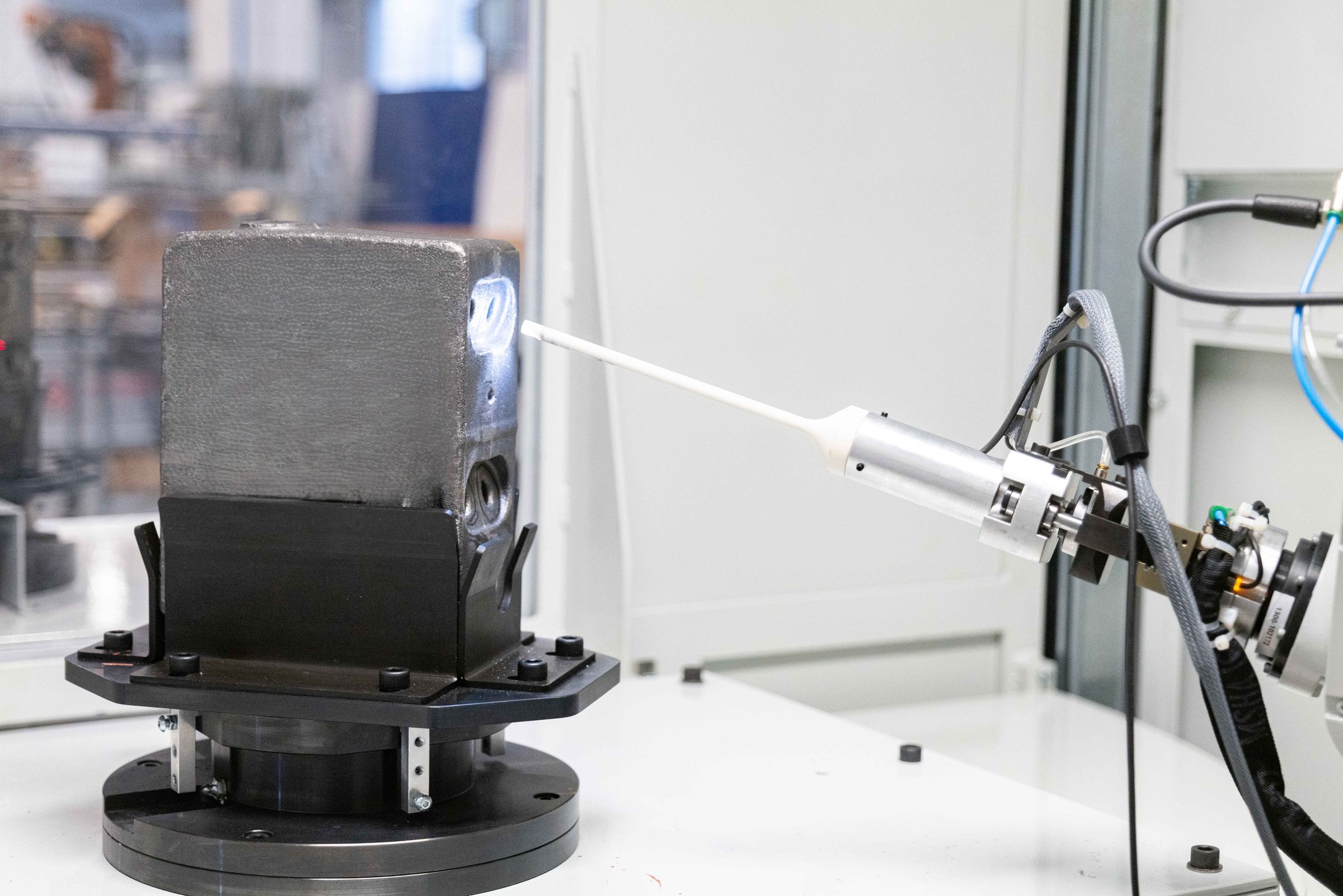
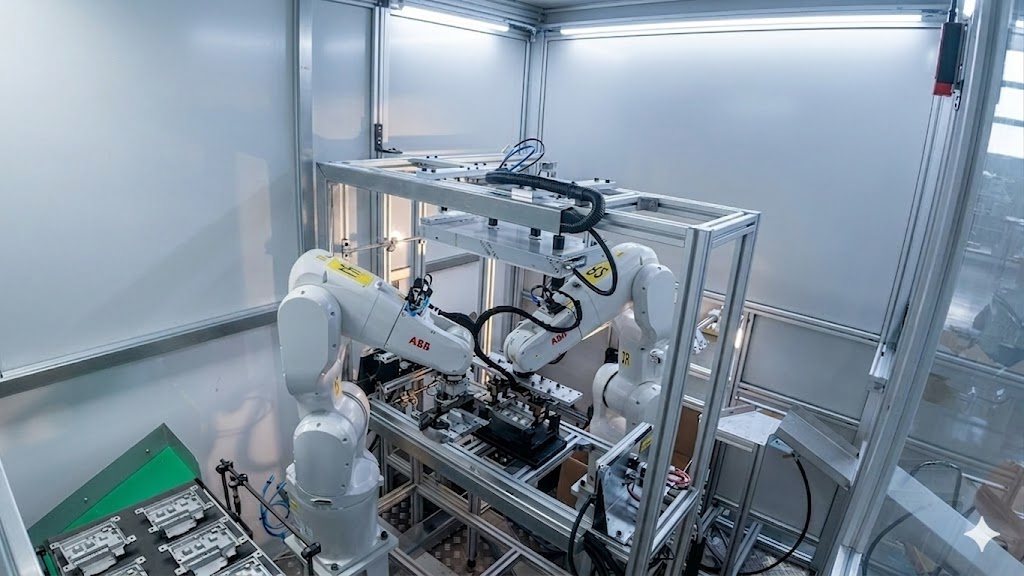
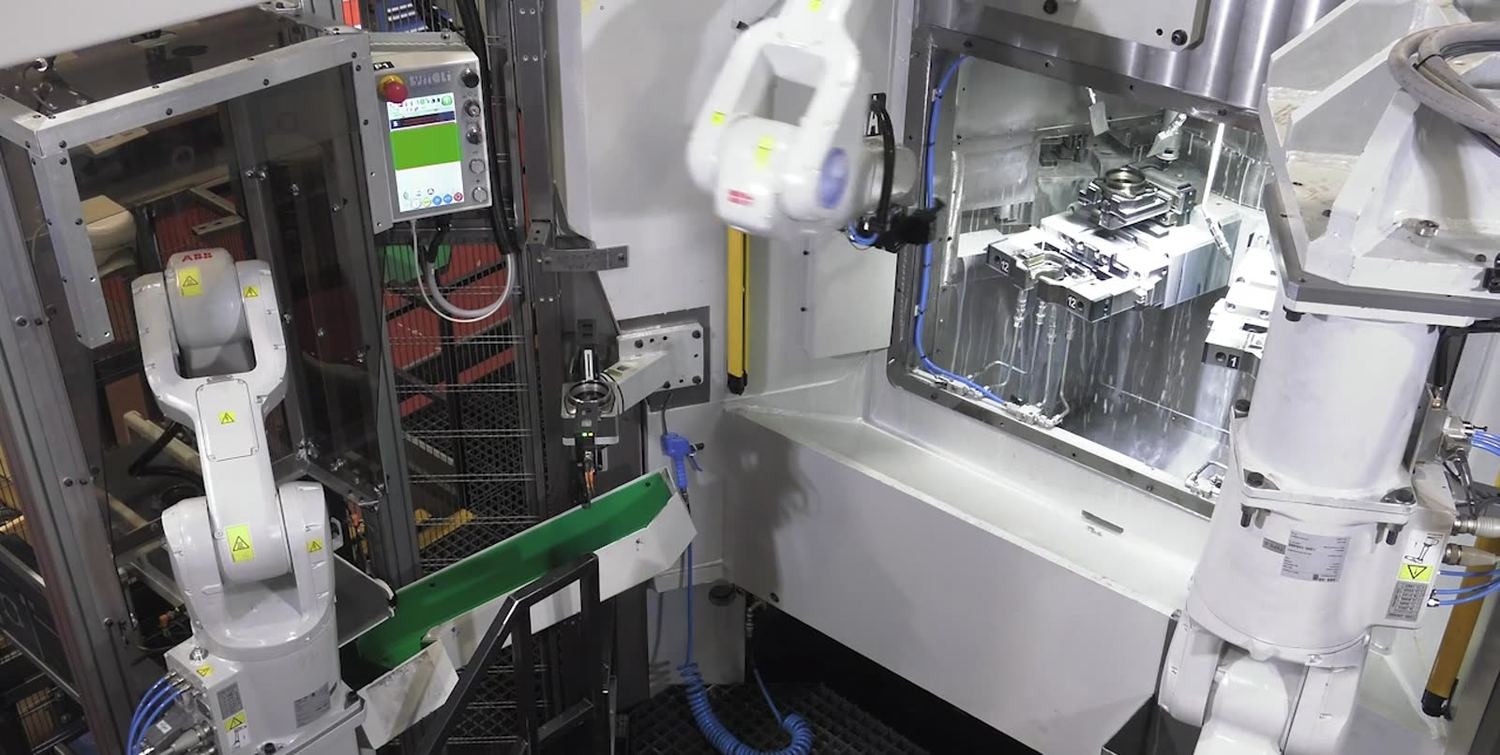
A standard cell for automatic inspection of internal channels. A robot inserts the borescope into every bore and two AI models analyse every frame in real time.
Manual borescope inspection is the hardest check there is: it demands constant concentration, is physically punishing and is still only a sample. Training an operator takes months, and the instruments are expensive.
In hydraulic manifolds and valve bodies, a ridge or a lump inside a channel can't be seen from outside, yet it compromises everything downstream.
The cycle
Four steps, no sampling
Loading
The part is placed on the rotary table, by hand or automatically.
Scanning
The robot inserts the borescope into every channel, with 0° and 90° optics.
Analysis
The AI models process every frame in real time.
Result
Pass or fail, with the image of the defect saved for traceability.
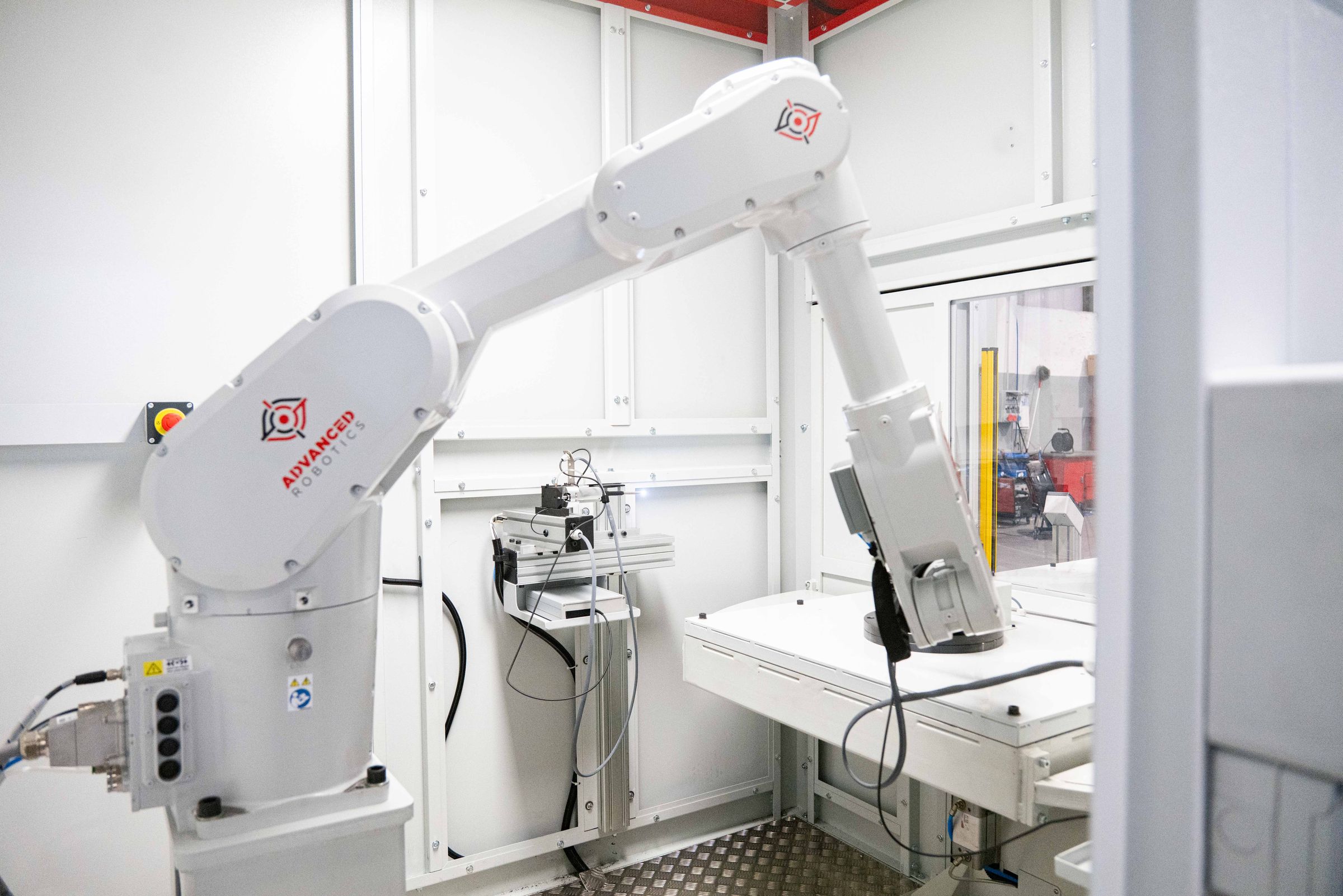
The robot with the borescope, inside the cabin.
Defects detected
Frames from the bores
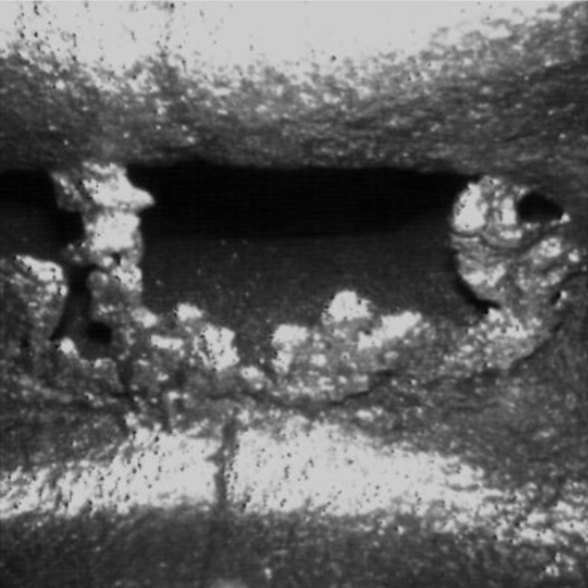
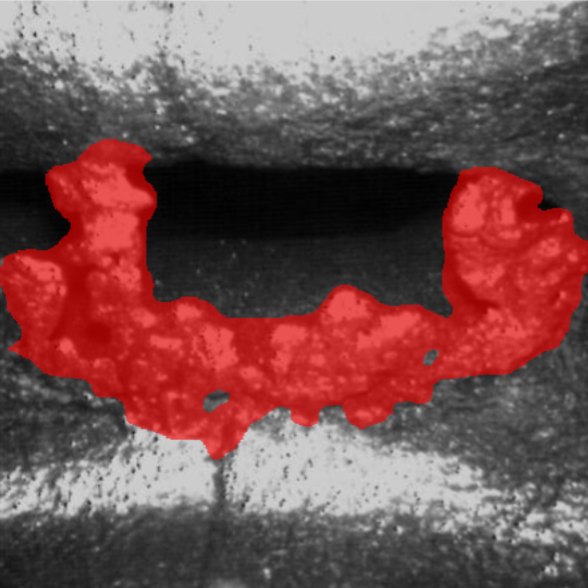
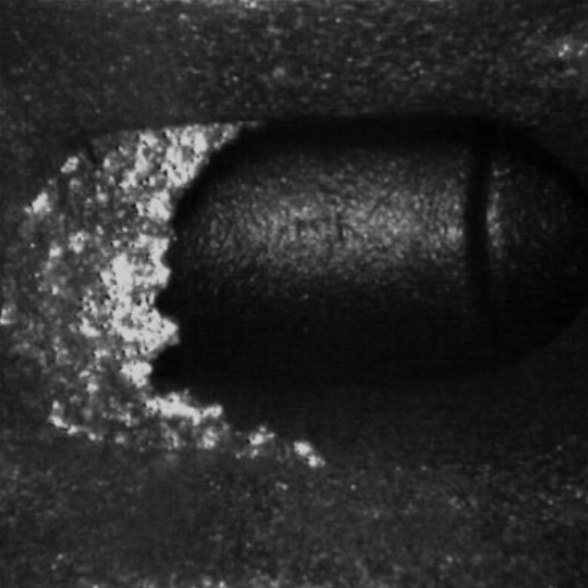
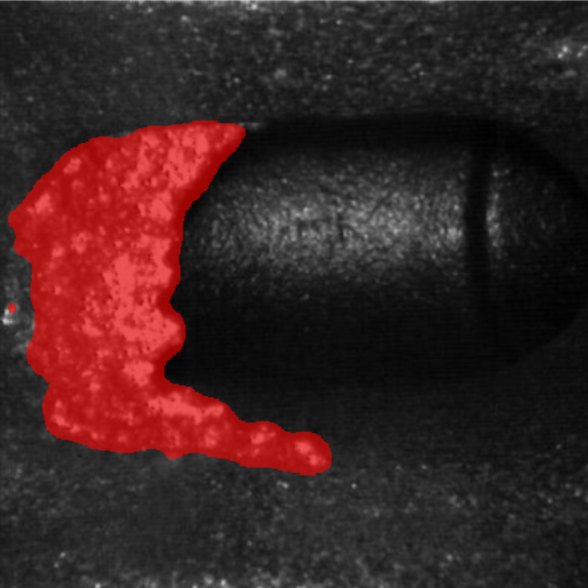
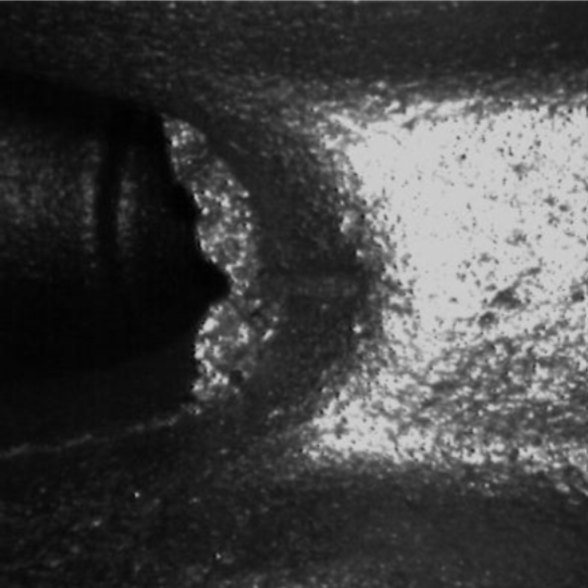
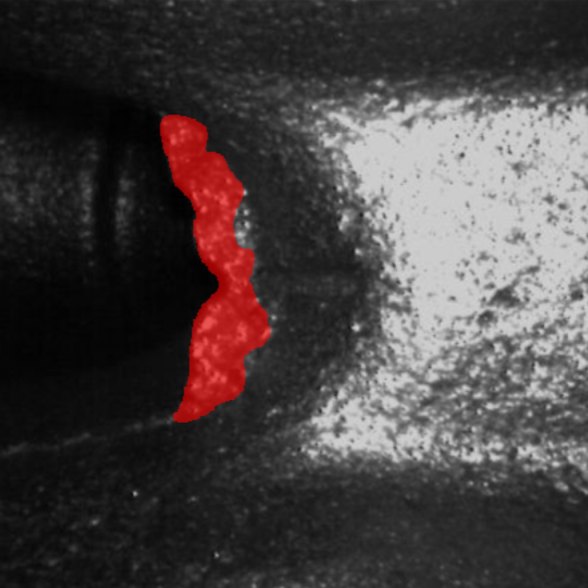
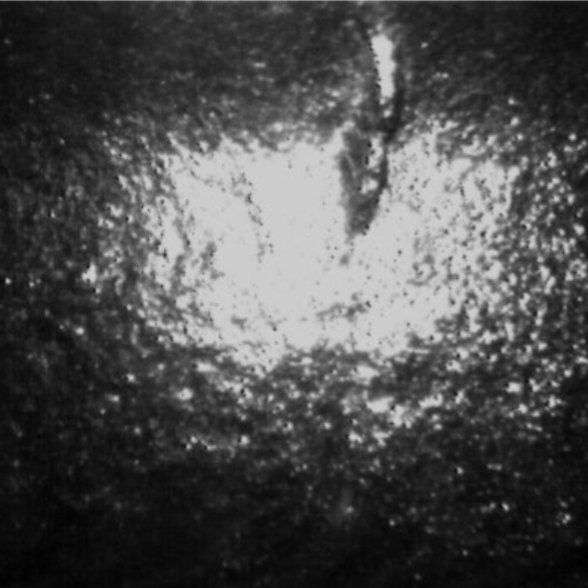
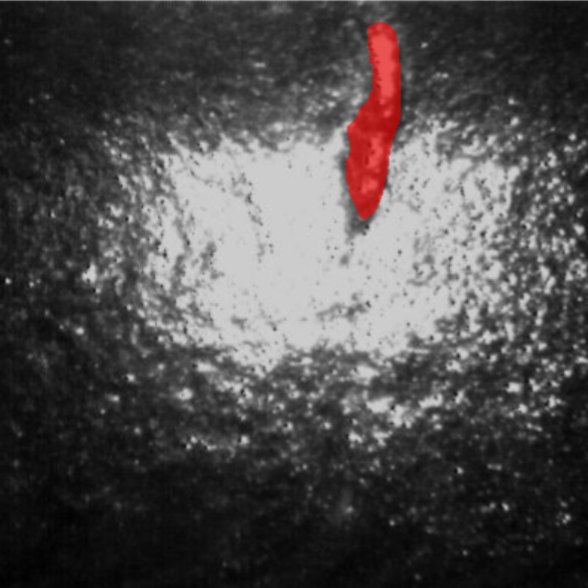
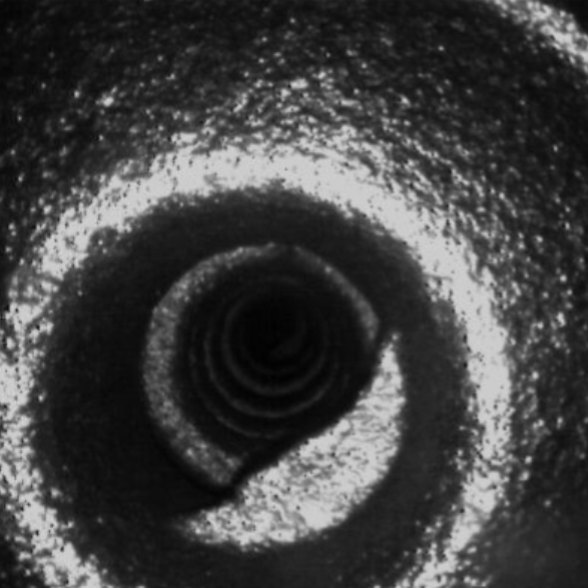
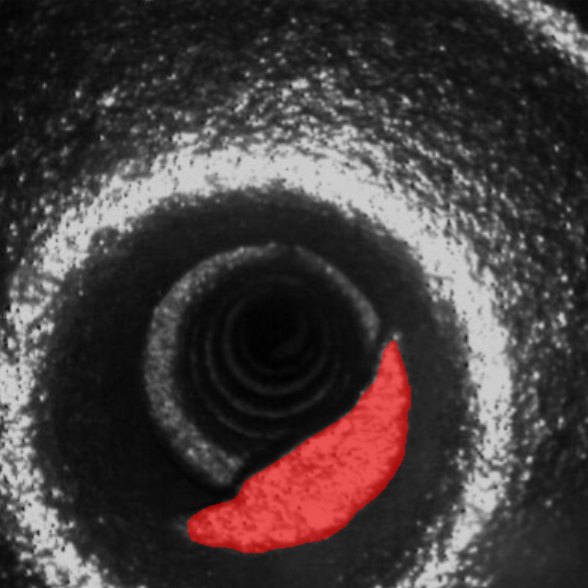
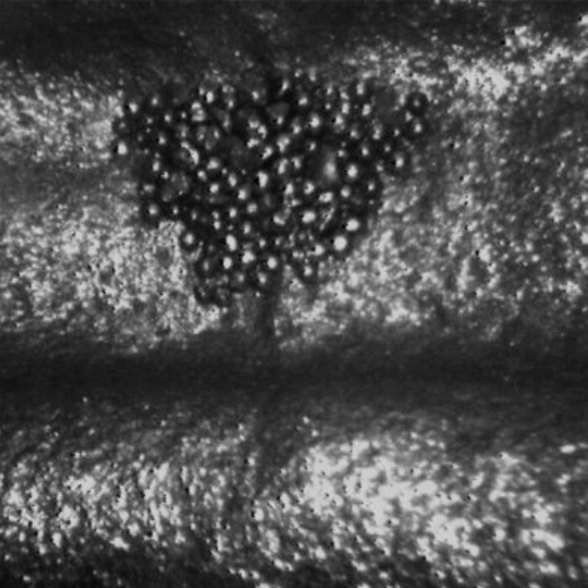
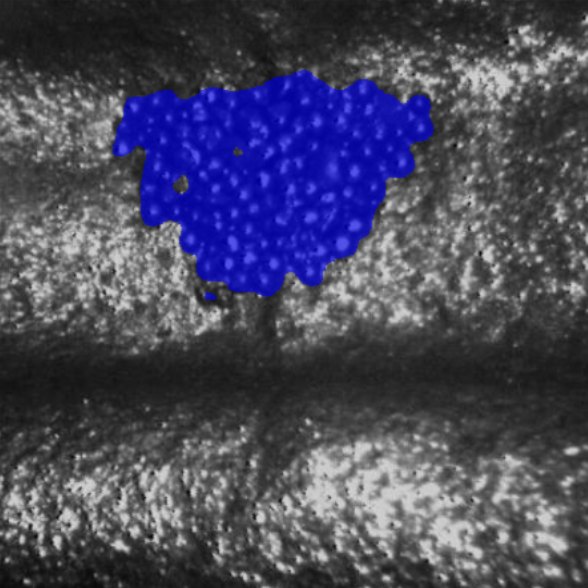
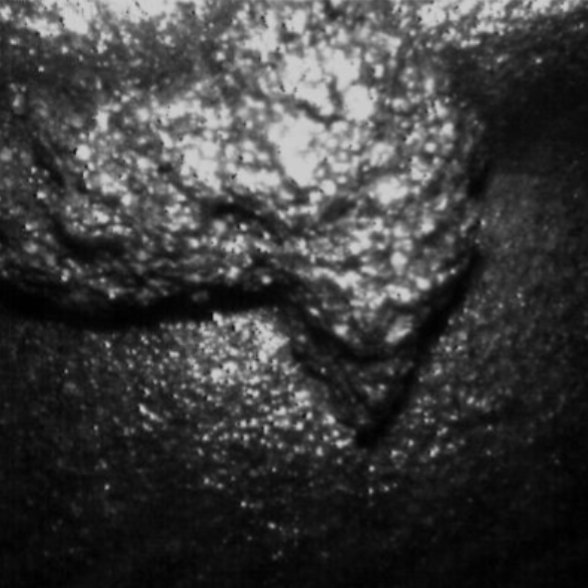
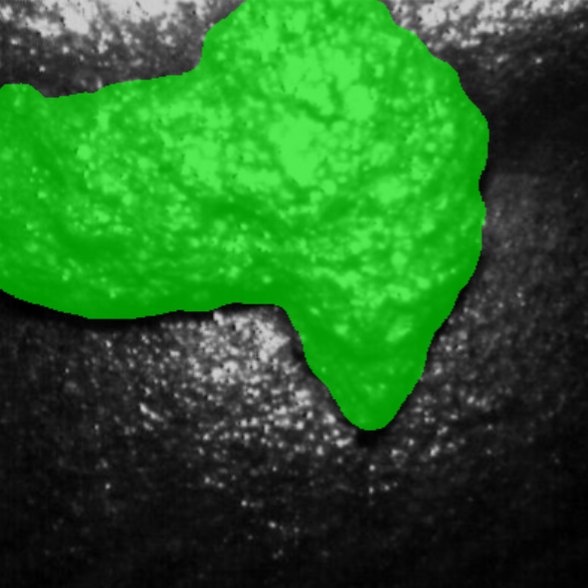
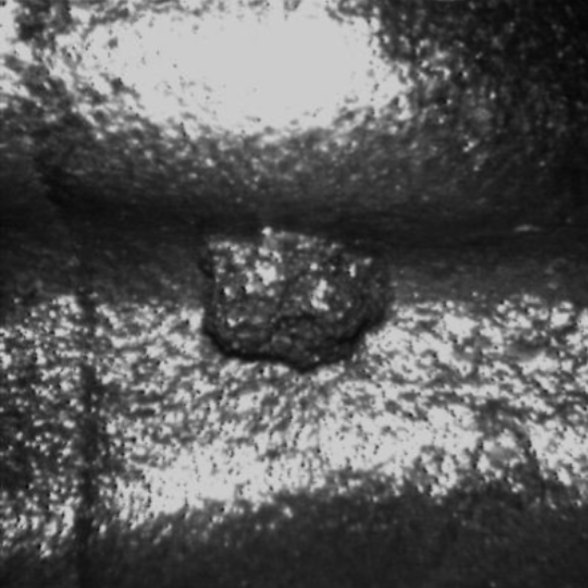
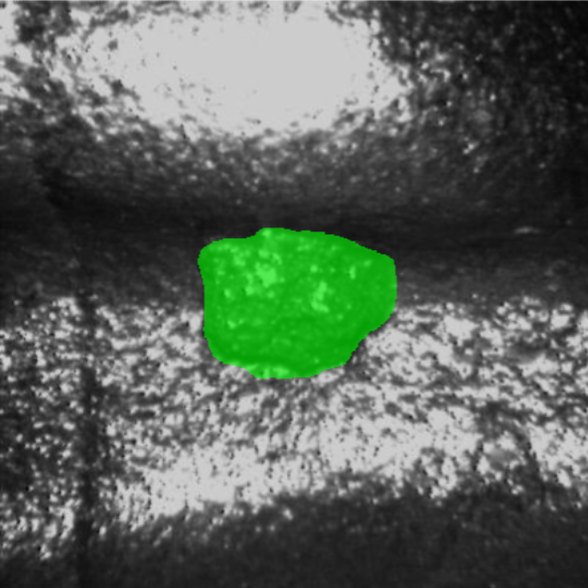
Real borescope frames, with the defects marked by the model: ridges in red, grit in blue, lumps in green. Hover over an image, or tap it, to see the original frame.
Ridge large, on the wall
Ridge where two channels meet
Ridge small, on the edge of the hole
Ridge thin, side view
Ridge front view of the bore
Grit residue in the channel
Lump large, protruding
Lump small, on the wall
The models
Two models, two ways of looking
Both models are validated on an independent dataset before production, and keep improving as parts are inspected.
Segmentation
The typical defects of your process
Pixel-by-pixel analysis trained on the defects of your process, such as ridges, grit and lumps. It returns the exact extent of the defect, not just its presence.
Anomaly detection
Anything that shouldn't be there
Trained only on images of conforming channels. It flags blockages and any departure from the reference, including defects nobody anticipated.
Robot
ABB 1300
Borescope optics
0° and 90°
Minimum bore diameter
8 mm
Maximum part weight
90 kg
Cell footprint
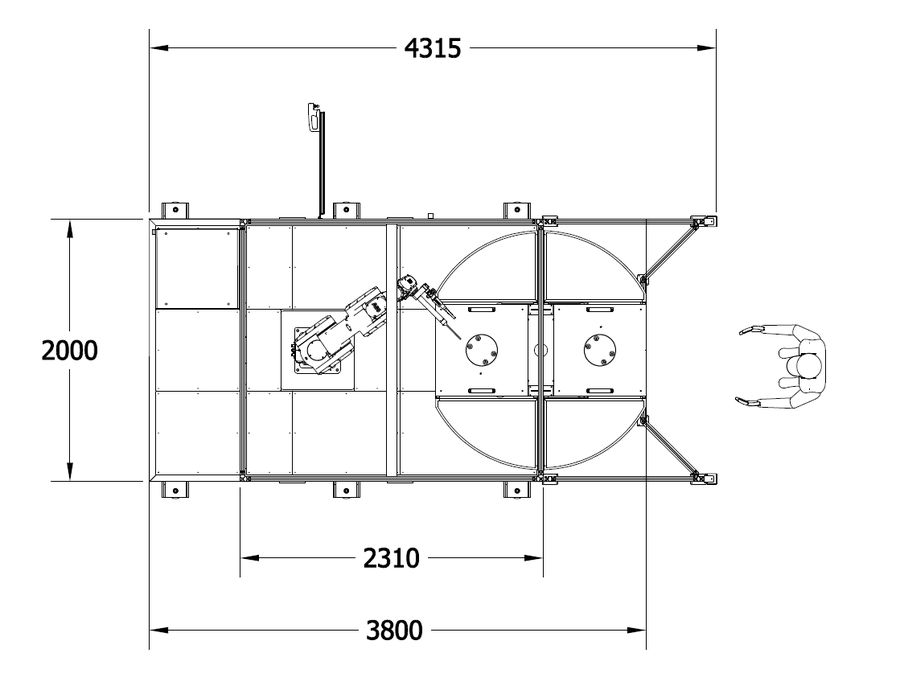
3800 × 2000 × 2600 mm
Table
Rotary, multi-position
Loading
Manual or automated
Cabin
Enclosed
Inspection coverage
100% of parts
Dimensioned cell layout.
Where it is used
Internal channels from 8 mm up
Hydraulic manifoldsIts home ground: two cells in production.
Valve bodiesIntersecting channels and blind holes.
Automotive componentsInternal passages in machined parts.
CastingsCavities and internal passages.
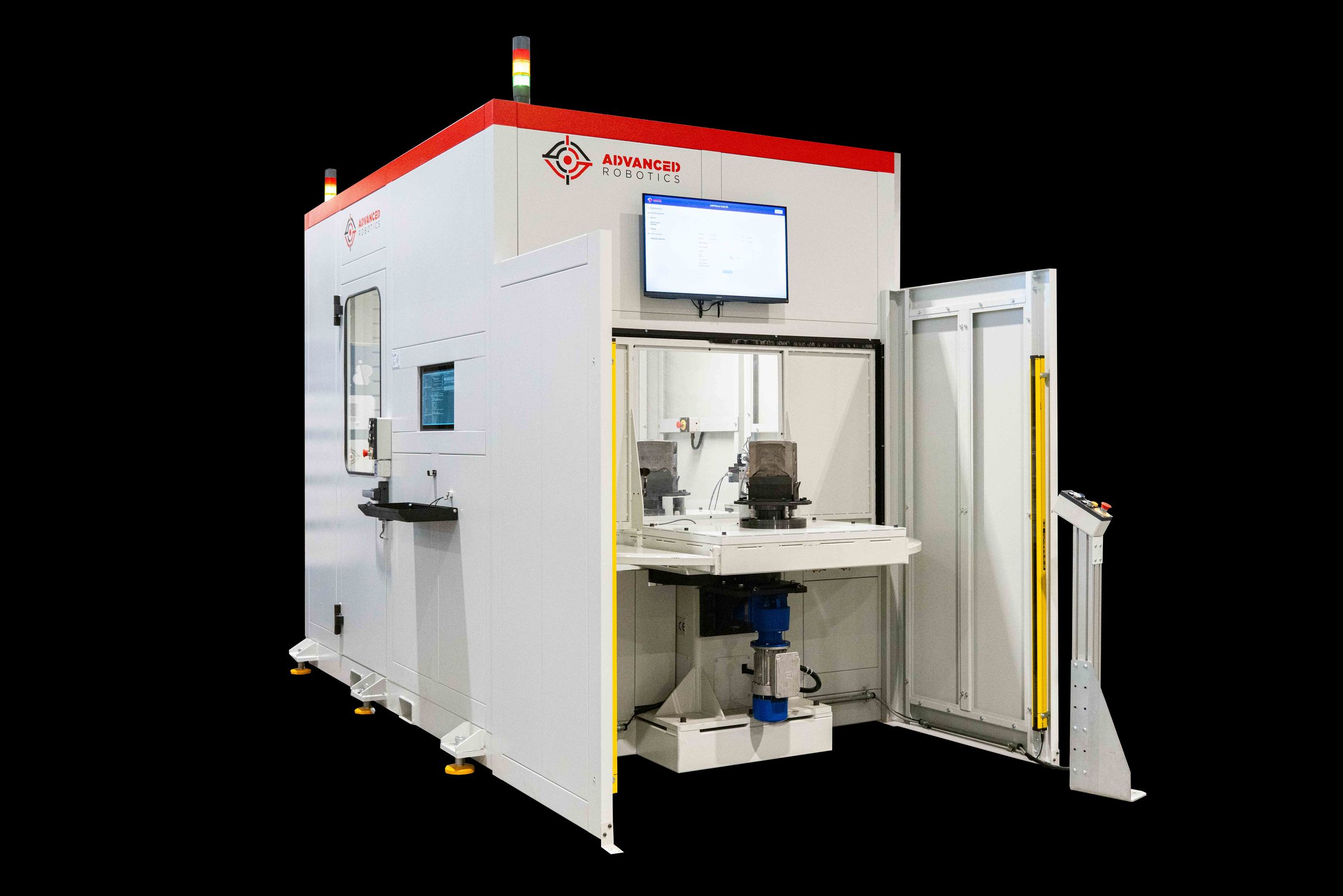
The cell: enclosed cabin, rotary table, manual or automated loading.